
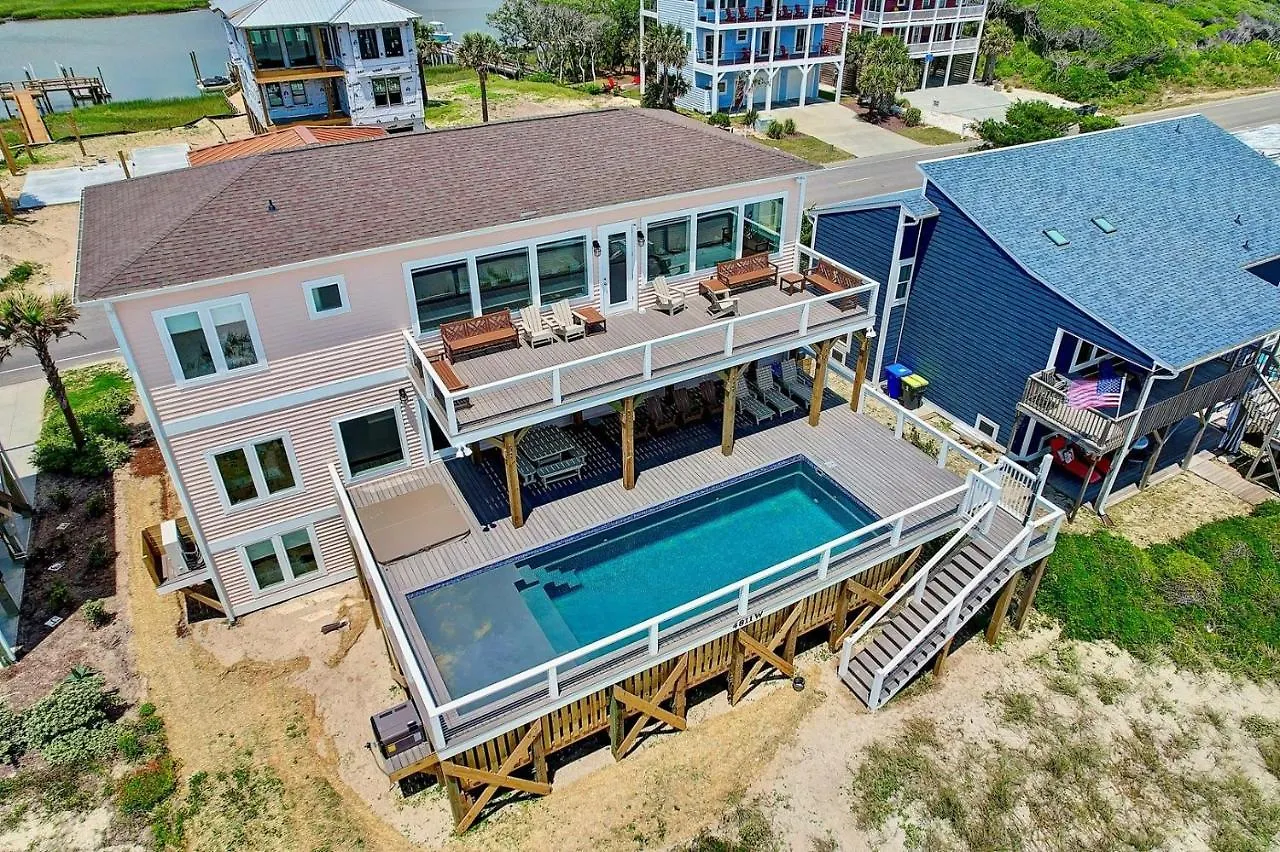
North Carolina's geography splits travel decisions dramatically - you're choosing between Atlantic beachfront communities like Wrightsville Beach and Oak Island, the Blue Ridge Mountains around Banner Elk and Asheville, or the remote Appalachian foothills near Crumpler. Holiday homes here aren't just a lodging option; they're often the only practical way to access these destinations with a family or group, since many of these areas have limited traditional hotel infrastructure. This guide covers 8 vetted holiday home rentals across North Carolina's most distinct regions, with specific details to help you match a property to your itinerary.
What It's Like Staying in North Carolina
North Carolina is a state that demands you commit to a region before you book - the coast, the Piedmont, and the mountains operate on entirely different rhythms. The Outer Banks and beach towns like Oak Island and Wrightsville Beach run on a peak summer calendar, while mountain destinations like Banner Elk and Asheville attract visitors year-round, with ski season drawing crowds from December through March. Car travel is essential in virtually all holiday home destinations here; public transit doesn't serve the areas where rental properties are most concentrated.
Families and groups of 4 or more get the clearest value from holiday homes in North Carolina, since nightly rates per person drop sharply compared to booking multiple hotel rooms. Travelers seeking a single-night city stop would do better with a conventional hotel in Charlotte or Raleigh.
Pros:
- Exceptionally diverse landscapes within one state - beach, mountain, and forest destinations within around 5 hours of each other by car
- Holiday homes give full kitchen access, which is critical in remote mountain and coastal areas where restaurants are sparse or seasonal
- Lower per-night cost for groups compared to equivalent hotel room count in the same region
Cons:
- No car means no access - rideshare coverage is unreliable or absent in most holiday home locations
- Peak summer weeks on the coast and peak ski weekends in the mountains require booking months in advance
- Grocery stocking is necessary in remote areas; the nearest supermarket can be over 30 minutes away
Why Choose a Holiday Home in North Carolina
Holiday homes in North Carolina consistently deliver more usable square footage per dollar than hotel rooms in the same areas - a 3-bedroom mountain cabin near Banner Elk typically costs significantly less per night than booking three separate hotel rooms at a comparable standard. The category also unlocks locations that have no hotel presence at all: beachfront units steps from Wrightsville Beach, cabins in the Appalachian foothills near Crumpler, and slope-access properties near Sugar Mountain Resort are only available as private rentals. Full kitchen facilities are a practical necessity in destinations where dining options are limited to a handful of seasonal restaurants.
The trade-off is operational: you manage check-in logistics, cleaning fees add to the headline price, and minimum stay requirements of around 3 nights are standard during high season on the coast and in ski areas.
Main advantages of holiday homes in North Carolina:
- Access to beachfront, ski-adjacent, and mountain properties that have no hotel equivalent nearby
- Full kitchen, laundry, and living space - essential for stays of 5 nights or more
- Group pricing that outperforms hotels when occupying 3 or more bedrooms
Main trade-offs in this specific region:
- Cleaning fees and minimum stay requirements inflate the real nightly cost for short visits
- Self-catering is mandatory in many remote mountain and coastal locations with few nearby food options
- No front desk or on-site staff - maintenance issues require contacting the property manager directly
Practical Booking & Area Strategy for North Carolina Holiday Homes
North Carolina's holiday home market divides into three distinct booking zones, each with its own timing logic. On the Brunswick County coast - Oak Island specifically - peak demand runs from late June through August, and waterfront properties are typically booked out around 12 weeks in advance for summer weeks. Wrightsville Beach, directly east of Wilmington and only 14 km from Wilmington International Airport, is the most accessible coastal option and tends to price higher than Oak Island for comparable square footage.
In the High Country mountain zone - Banner Elk, Valle Crucis, and the Powder Horn area near Boone - demand spikes twice: ski season from late December through February, and fall foliage from mid-October through early November. Sugar Mountain Resort is the anchor attraction for ski-season bookings. Asheville, by contrast, is a year-round urban destination with a walkable downtown and no seasonal collapse, making it a stronger base for travelers who want restaurant access alongside outdoor activities. For the Crumpler and New River area in the northwest corner of the state, summer hiking and fishing are the primary draws, and the area remains relatively uncrowded compared to Boone or Blowing Rock.
Best Coastal Holiday Homes in North Carolina
Oak Island and Wrightsville Beach represent North Carolina's two most popular coastal holiday home markets - Oak Island for quieter, family-oriented beach access and Wrightsville Beach for proximity to Wilmington's infrastructure and amenities.
-
1. 10 Oars
Show on map


 Check-infrom 16:00 until 23:59Check-outuntil 10:00
Just a few rooms left at the best rate!
fromUS$ 1411
-
2. Nirvana
Show on map


 Check-infrom 16:00 until 23:59Check-outuntil 10:00
Just a few rooms left at the best rate!
fromUS$ 2178
- Show on map
Best price guarantee
-
4. The Islander - 5E By Sea Scape Properties
Show on map


 Check-infrom 16:00 until 23:59Check-outuntil 10:00
Hurry – almost gone at this price!
Best Mountain & Cabin Holiday Homes in North Carolina
The western North Carolina mountains offer a completely different holiday home experience - ski access, hiking trail proximity, and log-cabin character replace the beach dynamic entirely. These properties suit groups who want outdoor-activity bases in the Blue Ridge and Appalachian zones.
- Show on map
Best price guarantee
-
6. The Castle At Valle Crucis
Show on map


 Check-infrom 16:00 until 23:59Check-outuntil 10:00
Hurry – almost gone at this price!
fromUS$ 1434
-
7. The Cabins At Healing Springs
Show on map


 Check-infrom 16:00 until 23:59Check-outuntil 11:00
Rooms filling fast – secure the best rate!
fromUS$ 89
-
8. Upstream Penthouse
Show on map


 Check-infrom 16:00 until 23:59Check-outfrom 09:00 until 10:00
Rooms filling fast – secure the best rate!
fromUS$ 1705
Smart Travel & Timing Advice for North Carolina Holiday Homes
Coastal properties on Oak Island and Wrightsville Beach operate on a strict summer peak - July 4th week is the single hardest week to book on the North Carolina coast, with most quality properties taken by April. If your dates are flexible, the last two weeks of May and the first two weeks of September offer near-identical weather with around 30% fewer crowds and more availability. A minimum stay of 7 nights is standard for summer weeks at most Oak Island rentals; shorter stays open up in shoulder season from October through May.
Mountain properties near Banner Elk and Sugar Mountain follow a dual-peak calendar: ski season from late December through February, and fall foliage from mid-October through early November, which is arguably the more competitive booking window because it's shorter and draws travelers who wouldn't otherwise visit a ski destination. For the Crumpler cabins and New River area, summer is the primary season for river activities, and weekday stays are significantly easier to book than weekends. Asheville has no true off-season; visiting in January or February offers the most accommodation availability and lowest rates, though some trail access in the surrounding mountains may be weather-limited. Plan for a minimum of 3 nights at any North Carolina holiday home to justify cleaning fees and the drive from major airports.


